

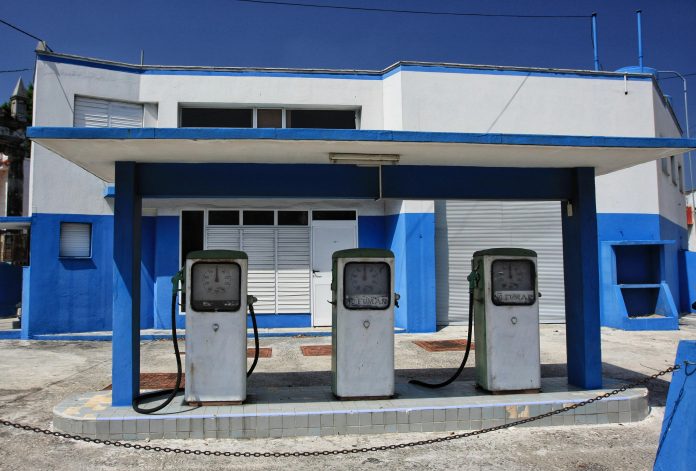


Demonstrations broke out across Cuba following announcements from the government that it had exhausted its supplies of diesel and fuel oil, which are crucial for power generation.
Energy Minister Vicente de la O Levy attributed the fuel crisis to the near-total energy blockade imposed by US President Donald Trump over the last four months.
“We are without any fuel [oil] and completely devoid of diesel,” he stated on Wednesday, as reported by state media. “We have no reserves left.”
Cuban President Miguel Díaz-Canel described the energy predicament as “particularly tense,” indicating in a social media post that he attributed the “dramatic worsening” of the situation to the “genocidal US blockade.”
Protestors filled the streets of Havana overnight, engaging in confrontations with police in response to the fuel shortages.
Social media images documented the unrest in various areas of Havana, where residents were seen banging pots and pans and setting fires to create blockades. Reports indicated clashes with law enforcement.
Cuba’s dependency on Venezuelan oil—historically exchanged for Cuban medical professionals and intelligence operatives—was cut off in January when US forces arrested the hardline leader Nicolás Maduro.
Mexico supplied one cargo of oil to Cuba on January 9, but subsequently ceased shipments under pressure from Trump. Later in January, Trump threatened tariffs on nations supplying Cuba as Washington intensified efforts for regime change.
Since then, the only supply has been a single shipment of 700,000 barrels of Russian crude that arrived in March, providing just a temporary reprieve for a nation frequently facing power outages.
Trump has suggested he could “take” Cuba or initiate a “friendly takeover,” beginning discussions to urge the regime towards economic liberalization, government reform, and the release of political prisoners. The US is also pursuing recompense for properties seized following Fidel Castro’s 1959 revolution.
Cuba has expressed a willingness to discuss issues like democracy, human rights, business opportunities, and collaboration with the US on migration and drug trafficking, but maintains that its political, legal, social, and economic systems are non-negotiable.
The island currently produces merely 40% of its oil requirements and has received solar panel donations from China, which have alleviated some of the power issues.
On Tuesday, the Cuban authorities lifted price controls on the limited petrol available, following a February decision to allow private sector fuel imports. Prices were previously set at about $1.30 per liter for premium petrol, a price that often exceeds $8 on the black market. Many drivers have left their vehicles unused for extended periods.
The oil blockade has led to dire shortages and strict rationing in a nation already experiencing the repercussions of prolonged US sanctions.
The critically important tourism sector has suffered immensely, with airlines grounding flights due to fuel deficits. Hospitals have postponed surgeries, food distribution and waste collection have been interrupted, and protests have become increasingly common.
De la O Levy acknowledged that power outages have worsened nationwide, with certain neighborhoods lacking electricity for as long as 22 hours. Cuba’s outdated power plants frequently break down.
Pointing to the “failures of Cuba’s corrupt regime” as the cause of the island’s struggles, the US State Department reiterated its “generous” offer of $100 million in “critical life-saving” humanitarian aid on Wednesday, noting that the Cuban government has declined this assistance.